
Stainless steel grinding & surface finishing
Ground stainless steel surfaces for tubes, round bar, flat bar and sections. EHI processes material on its own grinding machines according to agreed specifications.
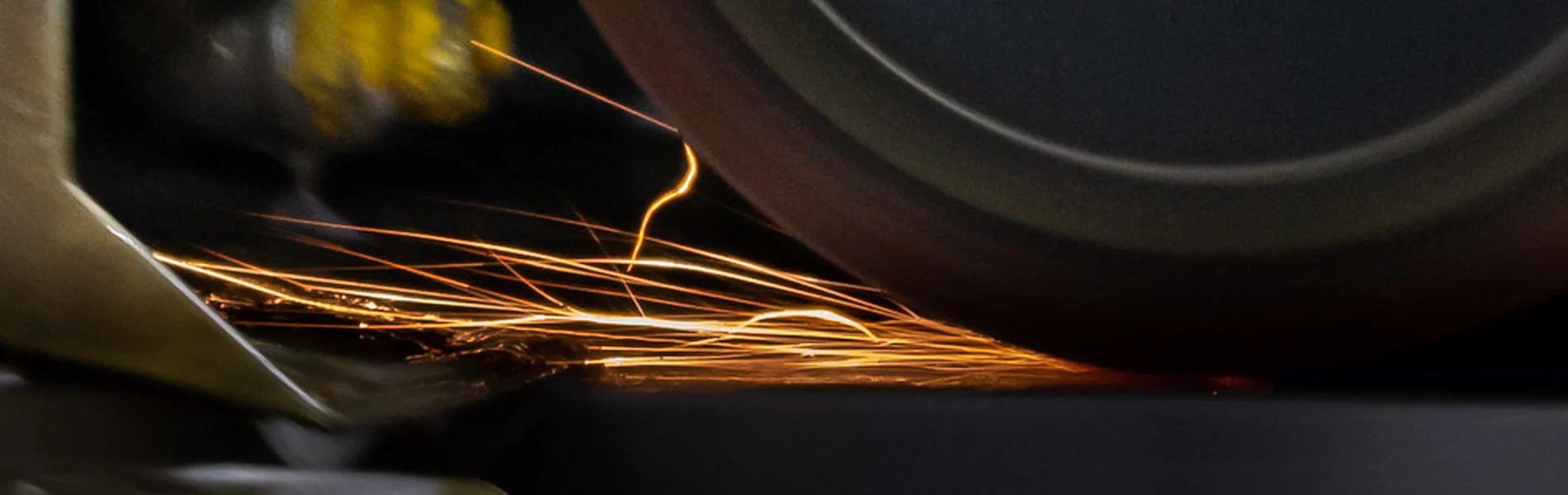 EHI / GRINDING SHOP BURBACH
IN-HOUSE PROCESSING / EHI BURBACH
Material and processing coordinated from a single source.
Our grinding technology allows surface finishes from grit 60 to grit 1200 – depending on workpiece, geometry and technical suitability. We agree the required appearance, roughness and surface quality with you before processing.
Our capabilities
- Three Löser and one Greif grinding line in the EHI machine park
- Grinding of tubes and suitable bar or section material
- Grits 60 to 1200 depending on material form and feasibility
- Brushing and polishing by technical agreement
- Material sourcing and processing from a single source
MATERIAL AND GRINDING FROM ONE SOURCE
Ground stainless steel tubes, flat bar and round bar from stock
At EHI you buy material and grinding from a single source: tubes, flat bar, round bar and sections come from our Burbach warehouse and are processed on our own Löser and Greif grinding lines – in grits from grit 60 to grit 1200, also to your sample on request.
Important: We only grind material from our own stock. We do not offer toll grinding of material supplied by customers.
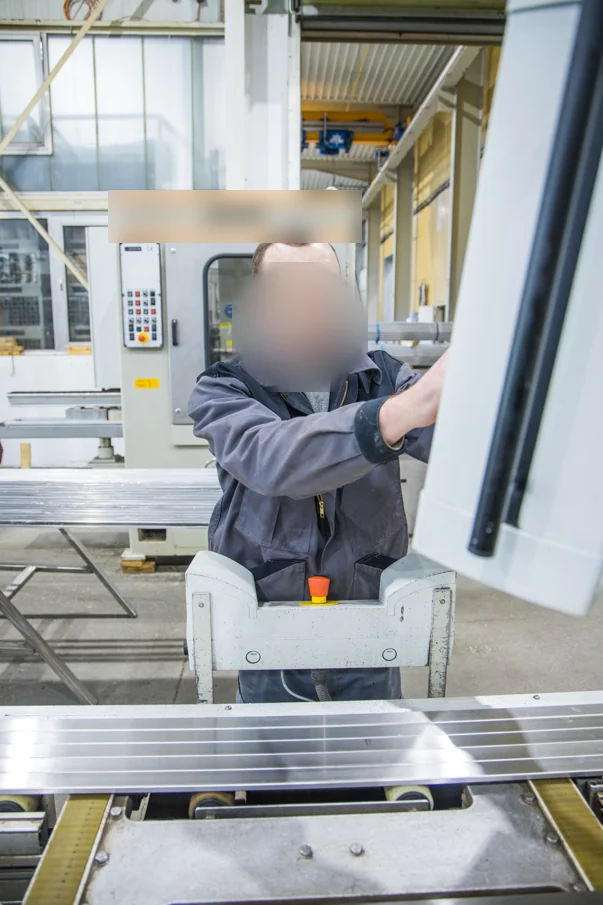
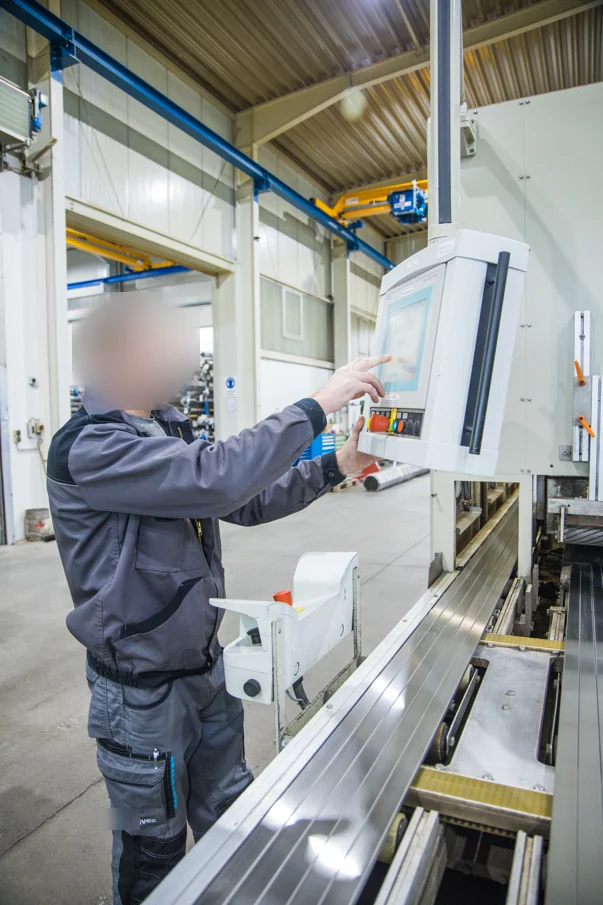
IN-HOUSE PROCESSING
Our grinding lines in Burbach
At EHI, grinding is done in-house: on three Löser grinding lines and one Greif grinding line. This is how we process flat bar, round bar, tubes and sections directly from our warehouse – without detours via external service providers.
- Grits from grit 60 to grit 1200, also to sample or customer specification
- Grinding, brushing and polishing of material from our warehouse
- Short distances: warehouse, saw and grinding line under one roof
PRACTICAL TIPS FROM STAINLESS STEEL TRADING
Grinding stainless steel: grit is not the same as roughness
In grinding, the grit (e.g. grit 240, 320 or 800) describes the abrasive used and not automatically a guaranteed Ra roughness. If a defined Ra or Rz profile must be met, measuring point, measuring direction, method and permissible deviations must be expressly agreed. For visible components, grinding direction, uniformity and transitions at edges also count.
Include the material form, grade and your drawing or surface sample with your enquiry. This reduces queries and makes quotations comparable.
Request processing directly ↗Grits from grit 60 to grit 1200
We grind stainless steel in ten grit levels – from coarse pre-grinding to the fine stage before mirror polishing. The higher the grit number, the finer the grinding pattern and, as a rule, the lower the roughness.
| Grit | Grinding pattern | Typical application | Ra in µm (guide value) |
|---|---|---|---|
| Grit 60 | coarse, clearly visible grinding marks | pre-grinding, removing scale and markings | approx. 2.5–3.5 |
| Grit 80 | coarse | pre-grinding, technical surfaces | approx. 1.8–2.5 |
| Grit 120 | medium | intermediate grinding, blending weld seams | approx. 1.0–1.6 |
| Grit 180 | medium fine | intermediate grinding, technical visible surfaces | approx. 0.6–1.0 |
| Grit 240 | fine, even line | standard for visible and decorative surfaces, railings, food sector | approx. 0.4–0.7 |
| Grit 320 | fine | decorative surfaces, food and plant engineering | approx. 0.3–0.5 |
| Grit 400 | very fine | high-quality visible surfaces, pre-stage to polishing | approx. 0.2–0.4 |
| Grit 600 | very fine, matt gloss | pharmaceutical and clean-room environments, pre-polishing | approx. 0.15–0.3 |
| Grit 800 | very fine, satin gloss | high-quality appearance, pre-polishing | approx. 0.1–0.2 |
| Grit 1200 | finest, almost glossy | pre-stage to mirror polishing | approx. 0.1 and below |
Guide values for orientation. The achievable roughness depends on the initial surface, grade, geometry and grinding method. If an Ra or Rz value is required, please state it in your enquiry – we adjust the processing accordingly and measure the roughness on request.
Frequently asked questions about grinding stainless steel
Which grit do I need for the food sector?
Grit 240 to 320 or a roughness of Ra ≤ 0.8 µm is often required. Your specification or that of your customer is decisive – tell us the required value and we will adjust the processing accordingly.
Is grit the same as roughness?
No. The grit describes the abrasive used, the roughness (Ra, Rz) the actually measured surface. The same grit can result in different roughness values depending on the initial surface and method. If a roughness value is required, it should be stated in the enquiry.
What does EHI grind?
Tubes and suitable bar, flat and section material in stainless steel – on our own Löser and Greif grinding lines in Burbach, also combined with material supply and cutting.
Do you also offer brushing and polishing?
Yes. In addition to grinding from grit 60 to 1200, we brush and polish by technical agreement and to sample on request.
What do you need for a quotation?
Grade, dimension, length, quantity, required grit or roughness, grinding direction and, if available, a reference sample.
What does stainless steel grinding cost?
We calculate grinding per metre. The price depends on material form, grade, dimension, length and grit. You receive it together with the material price in the quotation.
Does EHI also grind material supplied by customers?
No. We only grind material from our own stock. With us you get material and grinding from a single source – also under a framework contract.
Your processing enquiry to EHI
Send us your dimensions, quantity and processing requirements.